EmpathicWriter :: I make things for perceptive people.
  • Blog
  • About

Behind some happy faces.
8/12/2014

 
Picture
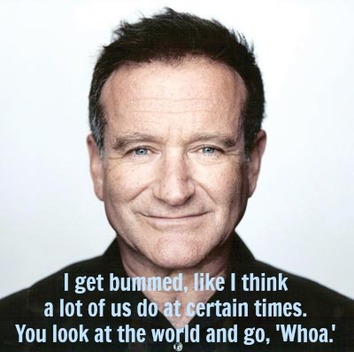
Robin Williams (July 21, 1951 - August 11, 2014)
Robin Williams made laughter his legacy.  Learning that he lived with enough emotional pain to cause him to end his life is extremely sad, and has a lot of us feeling things.  Is it the irony, that he brought joy to others, while holding internal hurt himself?  Is it the contradiction that he appeared happy, but wasn’t?  Is it the clash of celebrity and fragility?  Or is it the CRY to be real, with ourselves and with others?  I think it’s each of those things, (and more, of course) that has us feeling down about his death, but I’m going to focus on the last one.  Being real with ourselves and others, in the face of depression*, melancholy, sadness, grief, sorrow, and other not-happy emotions that our culture loves to hate.

Sadness visits to slow us down.
To catch and keep our healing attention
on a hurt -- our own, or someone else’s.

To mature our palate with the taste of bitter.
To tenderize our toughness, and humble our harshness.

Sometimes, you’d swear the sadness will slay
and obliterate you.  Or suck out all your hope-juice
and leave you a dehydrated shell of a person.  Sometimes,

it ruthlessly does.  But it can also sink you to the bottom
of your own ocean floor… where there are undiscovered
strengths waiting to be found by you.  But you gotta dive.

And here’s something else:  You can get good at sitting
with sadness, and learn to aim it at something you’d like
to destroy.  Then, like salt on ice, that sadness will burrow
its heat into the thing you choose to melt.
Or, you can use it to create something beautiful.
Or delicious.  Or useful.  Sadness is a NATURAL PART OF LIFE

that, for me, has been easier to manage, than the strong
social pressure to be happy all the flippin’ time.
That nagging pressure just encourages fakery and repression.
But a door is opening for us all to enjoy deeper, more
authentic connection based on what is real.

Sadness doesn’t need to be pepped up with egg-yolk yellow,
and engineered smiles that hide shadows and secrets
that are growing grotesque in the dark.  They crave air and light, too.

I’m not romanticizing sadness, but legitimizing it.
I’m asking that we please stop shooing, shunning
and shaming unhappiness.  Diagnosed, or not.
Medicated, or not.  Long therapeutic history, or not.

Emotions distinguish us from other life forms and, have you noticed?
We’re kind of… emotionally STUNTED.  Uncomfortable and awkward
with intimacy.  Shielding, blocking, deflecting, avoiding, masking,
hiding, pretending, distancing… all while *hungry* for true connection,
but scared to let our real face and whole heart show, because we know
the rules of domesticated happiness.  But when we hear the crackle
from an illusion shattered, it's a good time to press “reset” if we want.

I get bummed too, Robin.

He held both light and shadow.
Like we all do.
May he rest in peace.


*  Learn more about depression here.

Why I write.

8/2/2014

 
I write to mend
those places that got
snagged, ripped or frayed
while being human,
with other humans.

I write to remember
to play with my words, i.e.
"traffic jam" is a city spread
made of cars.  Not fruit.
It's misleading.  Like "text,"
which was once more of a dull noun,
but now is more of a cannibalistic verb
that eats itself, because the fewer
characters, the better.  Apparently.

I write, of course, to know
what the heck I am feeling,
because it's not always clear
and obvious.  And when it is,
it changes.  Moody much?  Yes.

I write to send a signal
to other kooky bats
who hang upside down
in caves, and contemplate
their extinction.  I write to say:


"We are not a dying breed.
We are pollinators!  And we are
free from the burdens
of beauty + bright lights."


I write for those who are not
hummingbirds and butterflies
(gorgeous gluttons of glory.)

I write to praise the least among us,
because, well... because I am that, too.
Strange little batgirl, with peculiar powers,
and a pen.

Picture

Baby got boon!

7/25/2014


015:  Live your dreams. Produce no waste.

6/22/2014

 
Welcome to Episode 15 of the Empathic Writing Journey Podcast!  I started this podcast nearly 6 months ago as a way of chronicling my intent to:

(1) FREE myself;
(2) BE myself;
(3) deepen + sweeten my love affair with life; and
(4) promote empathy and permaculture/regenerative design.

Being faithful to each of these intentions has helped bring me healing I didn't even know I needed.  I was surprised to learn how angry and resentful I had become from feeling like I never had enough time or mental space to simply think.

It seemed modern life was always rushing me along, and crowding my inner world with unimportant clutter and chatter.  Two things I'm not particularly fond of, by the way.  I'm contemplative.  And mystical.  And empathic.  To flourish, I need plenty of time and space to tend to my solitary arts.  

But my life wasn't designed around those aspects of myself.  My need to think deeply.  Move slowly.  Connect meaningfully.  Create beauty.  And live gently.

Instead of doing those things so important for my well-being, I wasted my energy trying to adapt to CrazyWorld!  I had accepted an extroverted, consumptive lifestyle as my own, even though at my core I am neither of those things.  I was at odds with myself, and experienced a lot of suffering as a result.  So six months ago I just stopped listening, to the cultural mantra that hums in the background like a humidifier, and convinces so many of us to slay our dreams.  I listened, instead, to my truth-telling heart which had been holding The List my soul had made, of the things It wanted to do with this life.  Needless to say, droning along was not on that List.   

Living your dreams is the entire point.  Believing otherwise is not only an acceptance of the ho-hum, it's an insistence on it.

I'll close my check-in with this final observation:  The caterpillar has NO IDEA of the things the butterfly gets to enjoy.  If it is transformation you seek, it's important to consult those who themselves have been transformed.  It's a lot of well-meaning caterpillars out there.

I'm interested to know what's new, or lively, with you?  Please let me know in the comments.

Jill Lanier of Permie Peeks...

...recently featured my work on her inspiring blog.  Please see her article here.  She includes some pictures of vegetable beds from my yard, getting a nice watering from young neighbors :-)

A recommended Charles Eisenstein Video

Big thanks to Monica for sharing with me Charles Eisenstein's talk at the recent Slow Living Summit called, "Time is running out. Let's slow down."  It helped me better understand the anger I mentioned in my check-in.  Please make the time to watch, and consider, what he says.  

The 6th Permaculture Design principle.

The 6th Permaculture Design Principle advises us to "Produce no waste."  To carry out this principle, I recommend backpacking/"roughing it" at least once in your life for a minimum of 2-3 nights:

(1)  You will consider every piece of trash you produce, because you have to carry every piece of trash you produce until the end of your trip; and

(2)  When you have an established relationship with the outdoor world -- when you connect to some aspect of its beauty and power, and not just in an exploitive way, but in a relational way -- you will feel protective of its resources and, at the very least, you'll be more mindful about burning through 'em.

Along those lines, below is a two-ingredient conditioner that made no waste, AND made my tight curls soft, defined and frizz-free.  See pictures below!

Accepting my naturally coarse + curly hair.  Finally.

It took 43.5 years, but I have finally embraced my naturally curly hair!  No more forcing it straight with heat, and self-rejection.  (I'll share more about that whole process later.)  Curly hair is always thirsty and ready for more moisture, so I loved the results of this simple, very effective two-ingredient hair conditioner:

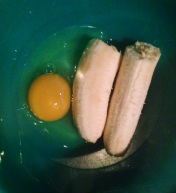
*  1 banana (you can also use an avocado)
*  1 egg

Mix in bowl until the texture is a smooth puree.  Rub into hair liberally, from scalp to ends.  Pile hair on top of head, and cover with plastic cap for at least 20 minutes.  Rinse.  Enjoy softness, shine, pattern definition, decreased frizz... and aside from a banana peel, you make NO waste! ;-)

Picture
Picture
See those banana bits? Do a better job of mashing than I did. They made for slow drainage in the shower!
Picture
BEFORE banana-egg conditioner.
Picture
AFTER banana-egg conditioner.

014: A chat with Sara Ellis.

5/27/2014

 
Picture
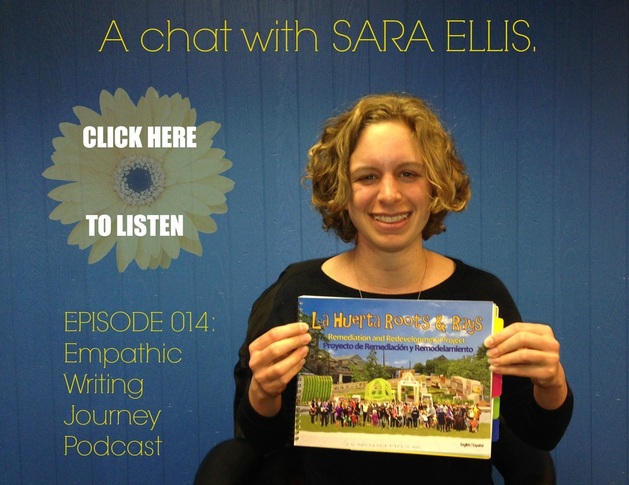
Sara holds a copy of La Huerta Roots + Rays' Remediation and Redevelopment Project, a 116-page highly detailed plan, available for online viewing here: ---> http://issuu.com/patriciabon/docs/book_1.1_print

Frequency.

I recently bought some strawberry plants and had to choose... between frequent and small, or less frequent and large.  Interesting choice.

And speaking of frequency... the first dozen podcast episodes
of the Empathic Writing Journey came out every week.  But the last two have taken twice as long.  One reason is because the weather has finally broken in Chicago, and there is food to grow and trees to plant!
  I've been learning so much from working with Cheryl Ann Wilkerson at Common Threads World Garden (Episode 7), and Matt Stephens at Hales Franciscan High School's Food Forest.  As well as six vegetable and herb beds my neighbors and I planted in our shared residential yard.  So pending outdoor projects, I might be posting a little erratically, but I am here.  And we will make it through the 12 permaculture principles, and beyond!

The 5th Permaculture Design Principle.

We are now at the 5th permaculture design principle, which advises us to "Use and value renewable resources and services."

When you consume things as quickly and constantly as we do, it isn't surprising that a "throw-away" mindset would eventually become normative.  Consuming and tossing go together.  They are companion activities that keep alive single-use this, and disposable that.  Every little thing is shrunk-wrapped, and then placed in an oversized cardboard box, or some other form of excessive packaging that is utter waste and poor design.  It's offensive not just ecologically, but aesthetically.  Waste is ugly.  Efficiency is beautiful.

How can we influence product manufacturers and shareholders to move away from planned obsolescence?  Intentionally building inferior crap, with deliberately shortened life-spans should not be the accepted way.  But it is, because we have not insisted on wiser design.

Planned obsolescence is a very common and successful business strategy that instills a product's break-down of function or fashion from its very conception.  Unconscious spending -- making purchases without really thinking about them -- feeds that moronic strategy.  Helps it to grow stronger and more longlasting while, ironically, churning out quick-to-expire product-junk.

When we take into account resource-scarcity and landfill-limits, it should be easy to see why hyperconsumption is a very serious threat to our planet's ecosystems
.  Building things to break is stupid.  Being so easily manipulated
as to believe a skirt has a "season" is stupid.  Skirts do not have seasons.  And if we keep behaving so carelessly, we won't either.


Building power.  Building community.

Second in our 3-part series on La Huerta Roots + Rays community garden in the Pilsen neighborhood of Chicago, please enjoy my chat with Sara Ellis, the garden's volunteer manager.  In our conversation (not transcribed) we discuss a variety of topics including:

  • how to grow into eadership skills;
  • how to successfully work with difficult personalities;
  • how the 3 ethics of permaculture apply to urban planning;
  • the tense realities of gentrification, and more.
Sara is a recent graduate of UIC's Master in Urban Planning and Policy Program.  If you'd like to connect with her, there's a link to her LinkedIn profile in the show notes of this episode.

013:  The secret to how we evolve.

5/5/2014

 
A note to subscribers who receive these posts via email:  To hear the audio, please CLICK HERE.
Hey Beauties!  Welcome to the 13th Episode of the Empathic Writing Journey Podcast.  I recently followed my heart to Miami Beach for some sunny inspiration, and I got the bonus of a complete System Reset.  I send thanks and love to each of the very special people who made the past week so wildly rich beyond imagination:  Eslie, Clara, Gus and Alexis.  I celebrate all that had been before, and all that flows forward.

And to you, sweet listener, I thank you for the gift of your attention.
  I am always very interested to know what's on your mind, so do reach out to me either in the comment section of my blog at empathicwriter.com, on my Facebook Page at facebook.com/empathicwriter, or leave a voicemail message up to 5 minutes at 206-202-0217.

The 4th Permaculture Design Principle.

According to David Holmgren who conceived the 12 design principles of permaculture that we've been reviewing, the 4th one is to "Apply self-regulation and accept feedback."

"Self-regulation" is critical to get our consumptive lifestyles into a state of sanity and health.  The rate at which we burn through natural resources is not only appalling, but is also causing our 6th mass extinction.  Hellooo?  How can that knowledge not radically and immediately correct our out-of-control buying behavior?  How can we be more upset by the discontinuation of a sitcom TV show, than we are grieved by the discontinuation of an entire species life?!  We have got to get a grip on ourselves, and self-regulation is a mature, responsible way to do so.

I invited my Facebook friends and page fans to consider this principle along with me
, and I gratefully acknowledge Nancy Grayson who shared this gorgeous metaphor of how she applies self-regulation in her life:

"
Meditation is to a paddle as a canoe is to my life. When I put the paddle into the water, it propels my canoe forward. Without it, I would only see the same shoreline. As I become a stronger, better paddler, I can navigate rough waters with greater ease. I experience the thrill of digging deep, rising to the heights of challenging waves and the joy of sailing down the other side. Like any wild woman adventurer, If I were to capsize, I have the life jacket of my indomitable spirit and a self rescue plan with my favorite emergency supply - the appreciation of all life. This is how I apply self-regulation."

And this is how she accepts the feedback from that self-regulation:

"A giant mirror of cosmic proportion, made of light and sound of All That Is shattered into trillions of pieces. Tell me! Tell me! so I can see your light, hear your beauty and learn more of our reflection of who we are as individuated consciousness of the One that is in All."

Thank you, Nancy, for sharing some of your meditative practice with us!  I invite each of you listening to add your own thoughts about self-regulation and the acceptance of feedback in the comment section at empathicwriter.com

"The Secret" to how we evolve.

As I considered and lived with this 4th design principle of practicing self-regulation and applying feedback, it occurred to me that this is the demystified process of EVOLUTION:
  • Evolve:  "develop gradually, especially from a simple to a more complex form."
  • Develop:  "grow or cause to grow and become more mature, advanced, or elaborate."
  • Gradual:  "taking place or progressing slowly or by degrees."
As evolutionary beings, we are iterative.  We are designed for graceful growth... emerging from one version, to another more glorious version.  Even bacteria and mold do this without much fuss or assistance.  So surely we homo sapiens sapiens are capable of maturation and the beautification of ourselves, our relationships and our surrounding environment.  Perfection is not our ultimate goal.  Gradual development is.  This is the secret to how we evolve -- through gradual development.  Can you feel the gentleness and non-overwhelm of that?  We can walk a reasonable road between the foamy-mouthed fanatical activist, and the comatose commerce-addicted consumer.  But the time to apply the feedback we've received about the devastating consequences of our exploitation and depletion of natural resources is now.  The choice is ours, Beloved:  evolve or expire.

The complexity of all this does not give us a Free Pass of Avoidance.  We have to build our level of ecological awareness, no matter how weak it might be right now.  This is not a hippie movement.  Or a cause that only impacts liberals, progressives, new-agers, or any other compartmentalized excuse we may like to hide behind.  Any and all who enjoy breathing unpolluted air, drinking uncontaminated water, eating nutritious food and
protecting biodiversity -- (all of which is essential to our own physical existence) -- must cultivate some degree of ecological literacy. 

Mmmm good, ear-candy!

A year and a half ago I wrote an e-book about an inherited neurological trait I was born with called Sensory Processing Sensitivity.  This trait endows 25% of all living organisms with a nervous system that is more sensitive and, therefore, receives more sensory data than "regular" nervous systems do.  The name of the ebook, which is available on Amazon.com, and can be easily found by searching my name, is titled "The POWER of Your Intense Fragility: What culture hasn't told you about being sensitive AND strong."  Many of you have asked for an AUDIO version of this, and it should be available by May 10th!  Thank you so much for your interest and support.

To our gradual and steadfast development,
Erika  XO

012:  A chat with Imogene Ellis.

4/26/2014

 
Picture
A note to subscribers who receive these posts via email:  To hear the audio, please CLICK HERE.

Geologist.  Gardener.  Exploratory sculptor.


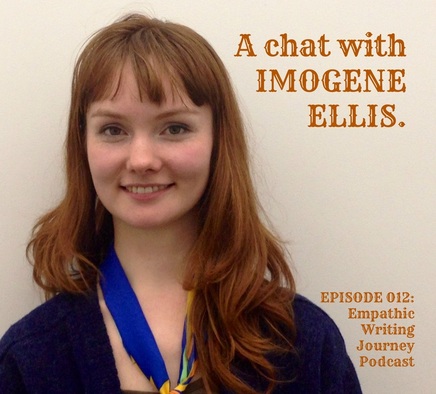
Welcome to Episode 12.  This is the first of a 3-part series, each featuring a visionary, action-taking young woman who faithfully volunteers at La Huerta Roots and Rays community garden in the Pilsen neighborhood of Chicago.

One of the reasons I started doing these interviews -- having simple, recorded conversations with people who are in conscious relationship with the planet they live on -- is because there really is something special about them.  I respect their ability to notice and support cycles of life, in a technologically-dominated era.  I value conversations that are centered around Life, or are full of Life.  That's how I felt talking with this renaissance woman, Imogene Ellis.  Here's our sensory-rich and playful chat.

In addition to Roots and Rays, here are a few more of Imogene's favorite resources:

  • Annie Dillard's Pilgrim at Tinker Creek
  • Earlham College's Geology Department
  • Chicago Wilderness' Greening Infrastructure
  • Chicago Wilderness' Leave No Child Inside Initiative
  • Garfield Park Conservatory
  • Manhattan's Battery Urban Farm (Hi, Anna!)

Next Up:  Permaculture Principle #4:  "Apply self-regulation, and accept feedback."

011:  Introducing Inner Terrain (a place to be ultra-human).

4/19/2014

 
Picture
A note to subscribers who receive these posts via email:  To HEAR THE AUDIO, please CLICK HERE.

This episode is different from the previous 10, which were focused on earth care and restoration.  We'll always be developing that conversation of ecological sanity, and we'll also now include a new segment about our inner terrain. 

This is my domain of comfort and expertise -- our heartscape.  Sometimes it's lush and thick with life.  Other times it's barren or bruised from a difficult season.  I have always had a great navigational sense in this inner world.  I know where to find sources of Light and Water.  I know where the shade is, and where the berries grow.  I can identify poisons and dangers... and convert mysteries into something useful.  This kind of insight and guidance is an unlearned skill I recognized as a child, and have heeded and developed throughout my life.  I am, only recently, coming into full ownership of it.  I expect you will experience a difference in my communications going forward, because a barrier has lifted.  I understand my Role and my Reasons more fully now, than I have before.  Please consider the rest of this post the first of many insights about our Inner Terrain.

"Mom/Dad, look at me!"

Can you remember being the child who shouted that request?  Or maybe you're now a parent who receives that request?

I don't believe we are intended to grow out of this very basic, very human need to be
seen and heard.  Witnessed.  Social media is an example of our continued longing to share and to show.  To see and to know.

It is nice to self-express.  But
have you noticed how flat it can feel when whatever you've shared isn't really received by someone else?  You risk sharing something of importance to you, and it quickly becomes fodder for the next quickly passing moment.  There's no pause.  There's no resting with the thought or feeling that just got expressed.  Usually, there's just a hurried reply to keep the conversational ball bouncing.  Lots of times that quick, staccato-pace of chatter is all that's needed.

But there are far too many other times that an important happening gets no sunlight of acknowledgement.  Because most of us were never taught how to listen deeply and with a full and gathered presence, we rarely exchange that luxuriant gift with others.  And that's a true, but easily treatable, pity.


"There is no greater agony than bearing an untold story inside you." (Dr. Maya Angelou)

Agony.  It's a strong word, and I think Dr. Angelou has used it precisely.  Emotional numbness is our cultural norm, but in a fit of truth and honesty I think we'd all agree that it sure would be nice to have consistent access to a skillful listener.

And not one that you have to pay for.  Witnessing and giving full presence is a loving act we all can learn and give to those we are close to.  But we treat our emotional well-being like a dirty garment... sending offsite to a professional who, for a fee, will sanitize and starch the dirt and wrinkles that come from living.

A therapeutic professional is a great help for certain traumas, but a lot of our daily hurts and hopes could be wonderfully handled if a few more of us simply learned to listen more deeply and with full presence.

One great resource to help with that is an essay written by Brenda Ueland, "The Art of Listening."  She says, "When we are listened to, it creates us, makes us unfold and expand."  I hope you'll read all of her essay.  Her words help us to not only understand how to be better listeners for others.  Her words also help us understand our own desire for what I call conversational moreness.

how to create Conversational Moreness.

There are kisses.  And there are French kisses.
There are lightening bugs.  And there is lightening.

When two people come together for any purpose, the *potential* between them is mountain-moving.  But what usually takes place is more along the spatial lines of an ant-hill.  We settle
for a teeny-tiny fraction of what's available to us at every encounter we have with one another!

Below are some starting points for your Deep Listener and Full Presenc
er.
Once it's clear that you are in a conversation of greater importance -- usually distinguished
by higher levels of risk, exposure and vulnerability than in casual or surfacey conversations --
do the following 6 things.  Even practicing just one or two would be a great start:
  1. Ignore all screens -- this includes TVs, laptops, iPads and phones.

  2. Face, and look at, the person speaking.

  3. Receive.  Each.  Word.  They.  Say.

  4. Let this be about them.  Hold your own story for another time.

  5. Feel into what they are saying.  Imagine being them.
    (This empathic step grows your perspective and your personhood.)

  6. Ask questions that help them explore and expand what they are sharing.
    Like: "Can you say more about that?  What else wants to be said?  Anything else?"

The repeating question in #6 does WONDERS in helping another person
learn more from the very thing they wanted to tell you about.

Try this with a trusted friend or partner.  Incubate ideas.
  Get unstuck.
Let me know how it goes in the comments below.

Give the world the gift of felt intimacy.
Create conversational moreness.
Help better listeners multiply.
SHARE THIS POST.

010:  Draw strength from your Most Compelling Motive (via Permaculture Principle #3: Obtain a yield.)

4/11/2014

 
Picture
(A note to subscribers who receive these posts via email:  In order to HEAR AUDIO, please come to the site.  Thanks!)
Food, fiber, fuel and flora.  Getting these resources in large, cheap volumes is the primary objective of traditional agriculture.  Biodiverse flourishing, non-poisonous practices and the well-being of all species are not values of traditional agriculture.  Big, homogenized crops that yield a monetary profit is what drives this industry.

I object to the reckless, short-sighted
industry policies that allow the perversion of perfect seeds, the poisoning of crops we are to eat, the erosion and mineral depletion of our topsoil, and the crippling of our pollinators... all because of faulty metrics that are quite safe from the ecocide we not only partake in, but make a way of life.

So, there's that.

And as I thought about WHY BigAg does what it does (because of greed, eco-illiteracy and moral indecency) I also thought about how I actually agree with this 3rd permaculture principle that BigAg notoriously abuses, and that is to obtain a yield.  Get something for your effort or offering.  Symbiosis is all throughout nature -- mutually beneficial situations abound.  Something about that feels balanced and orderly to me.

For the strangest reason, every time I thought about those three words:  obtain a yield, I got struck with the strongest impression:  obtaining a yield is why we do what we do.  It's our first and primary cause.  For everything.  Uncovering our most compelling motive for why we do whatever it is we do gives us access to renewable energy from inside ourselves.  All you do is peel back as far as you can, with an ever deeper "Why?" until you hit your truth.  Repetitive self-inquiry.

Example:  Obtaining a yield from a job even if you dislike it.

Why do you keep that job you dislike?

I need to earn money.

Why do you need to earn money?

I have bills to pay, and also there are things and experiences I'd like to have.

Why do you pay your bills, and why would you like to have certain
things and experiences?

[Note:  Even if this feels awkward or silly, stick with it.  The felt boost you'll get will be worth it.]

Continuing:  I pay my bills because I got use out of a product or service
, and I want to continue getting that use.  And I want to have certain things and experiences because some of them enrich my human experience.

Why do you want your human experience enriched?

Because I believe life is to be enjoyed.

I believe life is to be enjoyed.  That is my Most Compelling Motive... I could also probably call it a guiding principle... the driving WHY behind my WHAT.  And tapping in to that strong rootedness
lets me see that, based on my Most Compelling Motive, which is the belief that life is to be enjoyed, I am in violation of myself when maintaining a job I dislike.  For someone else, who's Most Compelling Motive is more along the lines of felt security or predictability, maintaining a "good enough" job may actually be the truest thing for that person to do.

To sum up:  We are designed to obtain a yield, to exchange with each other.  Through a simple process of self-inquiry, we can uncover our
Most Compelling Motive in any situation.  Keep asking "Why" until an answer comes that has no precedent.  It will be a complete statement in and of itself, and because it'll be a home vibration for you, you can always re-center with it whenever you feel lost or off-base.

Try this!  If you get "an answer that has no precedent" -- a first-cause statement with no beginning -- I would love to hear about it.  Share your comment below.  Or call in to the number given at the end of show...

...which is coming now!

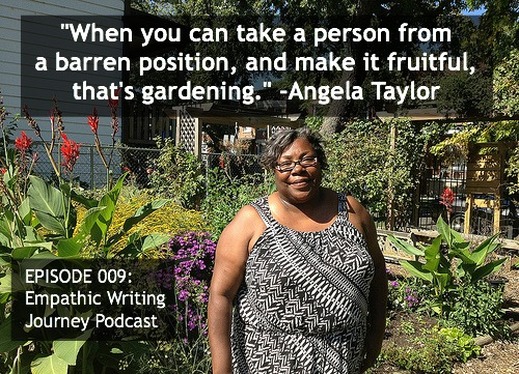
009: A chat with Angela Taylor.

4/5/2014


*** Your DAILY VOTE is needed.  Garfield Park has made it to Garnier's Final 5 in their Green Gardens Contest.  Help ensure their victory.  VOTE NOW. ***


Picture

Angela's heaven here on earth.

(A note to subscribers who receive these posts via email:  In order to HEAR AUDIO + SEE VIDEO, please come to the site.  Fully enjoy your multimedia experience. Thanks!)
Have you ever noticed how ivy grows?  Or any vine?  It shoots and spurts and curves.  I relate to this mode of travel.  And living!  I recently attended Connecting Chicago Community Gardeners' 2nd Annual Gathering at Navy Pier.  I went with my friend, Matthew Stephens, who introduced me to lots of wonderful people there... one of whom, was Sam Taylor... who is the husband of a force of nature -- Angela Taylor.

Angela agreed to have me over for a visit, and recorded conversation.  She is a person of interest for many inspiring reasons.  Below are links to where she and her work have been featured in the Chicago Sun Times and the Chicago Tribune.  And you can even see a video of then Mayor-Elect Rahm Emanuel lending a helping hand in the Fulton Street Flower + Vegetable Garden
that is adjacent to her Garfield Park home.

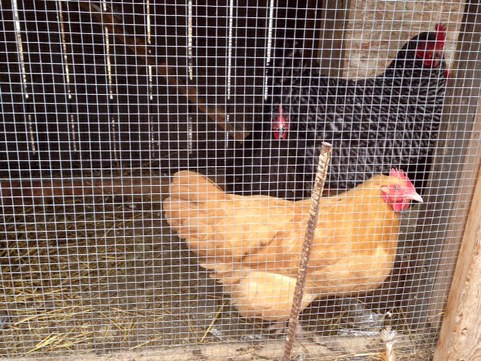
We talk inside the large and sprout-filled greenhouse that is just besides a healthy bee-hive that gave 10 pounds of honey in its first year, and we're also very near a chicken coop that's been giving about 6 or 7 eggs a day
.

This is another field interview, so y
ou will hear a mixture of sounds that come with a progressive urban garden:  crowing chickens, singing birds, and the rumbling green line 'el train rolling by every few moments.

Like Angela, the sound-backdrop is very real and genuine.  Fiery faith and fresh food is what she's serving up.
  Prepare to be inspired, as you hear how she closed out a successful career of service, and moved into the calling of her life.

Relevant and/or mentioned resources in this episode:

  • Chicago Sun-Times' article, "What started as one Garfield Park garden blooms into so much more." (August 17, 2013)
  • Chicago Tribune's article, "Fulton Street Flower and Vegetable Garden." (May 14, 2011)
  • Christy Webber Landscapes
  • Millennium Park's Cloud Gate, also known as "The Bean"
Next week... Permaculture Principle #3:  Obtain a yield.

What did you take-away from listening to Angela?  Please share your thoughts in the comments below.
Picture
A few of the eight chickens you hear crowing in the background during our interview.
At 10:30 see (then Mayor-Elect) Rahm Emanuel lend a helping hand in the Fulton Street Flower + Vegetable Garden that is adjacent to the Taylors' home.

008:  How to avoid burn-out + scarcity (via Permaculture Principle #2: Catch + store energy).

3/29/2014

 
Picture
(A note to my dear subscribers who receive these posts via email:  You may need to
actually  come to the site to hear audio, and see video.  Thanks.)

mentioned in this episode:

*  Two working definitions of energy, for both our macro and micro experiences with it.

*  Two LOWER forms of energy that we are quite addicted to.

*  Two HIGHER
forms of energy that we can easily implement.

*  Chronic sleep deprivation, shallow breathing + unexamined habits/patterns
    are exposed as energy drains that feed into other unsustainable cycles.

*  The beautiful efficiency of innate wisdom + rain gardens.

*  The value of auditing your life, and making a stand for your well-being.


"We need not just tinkering, but transformation of the system."

The Beauty Of Bull's Eye:  What the archer knows.

3/26/2014

 
Stepping ever-deeper into the truth of your heart, and the purpose of your life, does two major things:
  1. it makes you MORE visible and audible to your resonant community; and
  2. it also makes you LESS visible and audible to your dissonant communities.

Both of these outcomes are wonderful:  attracting the harmonious, and releasing the ho-hum-gobbledygook!

Allow the shake-out.  Instigate it, even.

Q4U:  How do you practice archery in your relationships + and in your biz/work?

007:  A chat with Cheryl Ann Williamson.

3/21/2014

 
Rumi said, "Let yourself be silently drawn by the strange pull of what you really love. It will not lead you astray.”

I met someone who allows exactly that with her life.  Meet Cheryl Ann Williamson, and be inspired by the beautiful, botanical, artistic themes of a life well lived.


  • Master Gardener + Instructor at Common Threads' World Garden
  • Retired Art Instructor of the Chicago Park District
  • Certified Tree-Keeper, Herbal Therapist + Permaculturist
  • Ceramic Artist + Horticulturist

006:  Observe + Interact (Permaculture Principle #1).

3/17/2014

 
Monet's Haystacks.
There are just a few notes this week, so please enjoy listening.  Below are links to people/things mentioned during the show:
  • Monet's Haystacks
  • Karen Roothaan
  • Observe:  to notice; to become aware of, especially through careful and directed attention.
  • Next week, Permaculture Principle 2:  "Catch + Store Energy."
  • In the comments below, please share an observation -- of any sort -- and how you interacted with that observation.

"Do something for yourself, while also reducing your adverse impact on the world." (David Holmgren)

005:  What I learned from my recent hospitalization.

3/12/2014

 
There are a lot of things I don't do well.  Some things I am remarkably bad at include:

  • making a big fuss about what to eat, or where to eat;
  • taking 6 steps to do something that can be done in 3;
  • wasting time, effort and resources with dawdling or idleness.

The above things cripple me -- like Superman's kryptonite -- and I recently learned why.  I, literally, don't have the energy to spare for that nonsense.

I learned that I have half the ideal amount of hemoglobin, which is the part of the red blood cells that provide oxygen (energy!) to the body.  It is the gas that makes the car go, and my tank has perpetually been on half, never full.  I always knew I was anemic, but a recent hospitalization -- the first in my life -- taught me I've been dangerously anemic.

Hence, my hard-wired tendency to want to conserve my energy for conversations and activities that matter.

When something is limited (like my energy has been), it takes on a preciousness.  It is of value, and not to be squandered.  In America -- the land of plenty, abundance and 348 different kinds of toothpaste -- we rarely feel scarcity.  Even those with low to no cash flow still experience a high degree of bounty the majority of the world will never know.

So we don't readily feel the preciousness of things.  We lack the inclination to ration our attention for things of high value.  We settle for junky mediocrity so long, and so routinely, until it has become the norm... while The Exquisite or The Deep feels burdensome, rather than savory.  Totally backwards.

In a weird way, I am saying thank you for my anemia... which has very likely contributed to my need for simplicity, non-hurriedness, smart systems and a life that will not force me to keel over from panting exhaustion, trying to keep up with the Joneses who, behind closed doors, and according to most happiness polls... are actually lacking peace of mind, contentment and/or strongly derived meaningfulness.

An iron regimen should improve my physicality and, hopefully, give me the energy to plant thousands of ideas, seeds and trees!

Barring anymore unforeseen mishaps, we'll be back on track this coming Monday, where you'll hear from a gardener I admire, and we'll also start talking about the Permaculture Principles, one principle at a time.  If you want to get a head-start on that, consider these three words, "Observe and Interact."

What I'd love to learn from you right now is: What is precious to you?  Share below!

004:  Seven steps to *becoming* the work you love.

3/3/2014

 
Q5:  [Continued from last week.]  "If we are to tell a new cultural story, and reconsider the economic objective of rapid consumerism in the United States, then how do you envision the exchange of goods and services supporting humanity?"

A1:  Please see the extensive work of Charles Eisenstein + his Sacred Economics.

A2:  Our current money system, for all its flaws, gives us a chance to figure out how we want to be in relationship with other people.  What we want to do or provide in exchange for the means to meet our physical needs.

Superficially, we can treat this opportunity with a soul-less approach.  Just prepare a resume, and get a skill-matching job.  Or ride on the back of market trends, and do what we see other people in business doing.

Or, we can access meaningful work outside of ourselves, by first looking inside of ourselves.  I've been in the workforce for 25 years -- as a traditional employee, contracted freelancer and self-employed entrepreneur.  Regardless the "form" of work I was doing, I was always... always... reaching for congruence.  I *tried* to assimilate.  You have no idea the years and effort I put into denying my core... my innate wisdom... all so I could attain what culture told me was "right" or "successful."

Eventually, I got soul-sick.  High-perceivers... people who feel a lot, and feel deeply, often struggle with existential suffering... because, so often, our inner world of harmonious ideals does not align
with the outer world of harsh cruelty and inefficiency.

We are the canaries in the coal-mine... detecting the lethal gas that's currently -- fraudulently -- being passed as "air."

So, it behooves us to -- sooner rather than later -- just give in to that impulse to create lives that actually make sense to us... feel good, through and through, to us... that honor the urges, leanings and prompts within our heart.  They are there to lead us down the most beautiful and amazing path, that we shape with contours unique to us.

Yes, this requires a machete.  And the bushwhacking of outdated, external scripts that we deeply know have been blocking our personal, and planetary, well-being.
  This bushwhacking removes the confusing, yet widely accepted, destruction that's been crowding out our most desired landscape of a life.

So, we cut.  To clear.
  A path of our own choosing. 

I offer you these seven steps to becoming the work you love.
 
This is the ultimate practice of personal authority.

E mpty.  Get still + silent.  Turn off all outside noises and distractions.  Unitask.  Give extremely focused attention to the next six steps.

M indful.  "Set the mood" for this important exploration with a meditative process.  You can concentrate on your breath, and observe each inhalation and exhalation.  You can gaze at a lit candle, and observe each sway and pulse of its flame.  You can knit... walk... garden... wash dishes... it really doesn't matter what you do, just make sure that whatever it is, you rpresence is undivided.  Please watch the 4.5 minute video below (thanks, Barry!) for an example of what mindfulness can feel like.

P erceive.  Now, with your mind clear and fully convened, you begin the internal work.  Start with a "litmus test," by thinking about your current work, and noting what within that work makes you feel expansive?  Next, notice what within your work makes you feel constricted?  Now, journey back in history a bit, to your childhood.  What preoccupied you in those days?  What habit, hobby or activity gave you the greatest delight in those days?  Your remembered answer to that question, very likely, is The Seed of what your heart most wants to do.  That Seed was planted in innocence, and was completely free of corruption... it was completely free from other people's expectations and/or fears... it the most original blueprint you can possibly source back to in this lifetime.  That Seed is strong, and has endured years of doubt and disbelief that it could really be a viable life path.  It has probably endured years of neglect, dismissal and even scorn, for being the thing you want, but you have convinced yourself it is not attainable.  It IS, in fact, attainable.  But you must reject -- bushwhack -- the cynical choir.  Off with their heads!, lest you continue listening to them, while ignoring your own heart-guidance.  Be especially careful of those voices -- internal and external -- that try to shame you with their self-righteous ideas about what's practical.  It sounds noble, but it's usually fear all dressed up, in its favorite disguise.  Rumi has said it best:  "When setting out on a journey, do not seek advice from someone who never left home."

A ssociate with like-minded people.  Now, presuming that your childhood preoccupation still gives you a sense of joy and aliveness, seek out the company of other people who are already doing some aspect of that Special Seed.  This is mindful networking, and the folks within those related clusters are your teachers and mentors.  Being near them will energize you in a way that's hard to describe.  These people represent your childhood self, and your future self.  And your right-now self can more easily bridge the two by seeing how others have already accomplished what you previously thought impossible to do.

T ell others about your dream.  You can do this a number of ways.  For example, I started this podcast as a way of "telling my dream."  You may prefer other creative expressions.  It doesn't matter how you tell, just that you tell.  Those out-loud statements are sun and water for your Seed.  Nourish it.

H old steady.  Once you say out-loud what it is you are pursuing -- which is the truth of your life -- your resiliency will be tested in a variety of ways, but mainly:  through unsupportiveness of others, and your own fear.  This is the hardest part of this process.  You will want to retreat and "go back" to the land you know, even if it's barren.  Hold your ground, in spite of doubts that arise.  Hold your Dream Seed close to you at all times.  Strengthen it with your favorable thoughts.  Interact with it, through research, experimentation, play and study.  Commit yourself to mastering the expression of your Seed.  This challenging step is actually the process of becoming the work you love.  It is both evolutionary and organic.  This step matures and readies you to bring your Seed from inside your heart, out into the marketplace.  Your transformed presence in the marketplace uplifts it from shallow greed to deep possibility. 

Y ield.  This step is actually two activities.  The first is yielding in the passive form of surrender and trust (basically, waiting in confident expectation, which is similar to the step above).  The second is yielding in the active form of gathering, collecting and harvesting.  You will start to see external results in response to the internal seed-work you've done.  Enjoy the fruits of your labor.


There is a lot more to be said about this, but I wanted to give you a starting place for the interior work needed to revolutionize your exterior work.  I hope you find it helpful.

PoeticFlow:

How I got from SAD (separated, alienated, disconnected)
to GLAD (green, liberated, aligned, depth.)


Supreme sadness woke me
from the American dream
that ran on the steam
of my distractedness;
my chosen stress;
and wasteful mess (es)
Spilled milk?  Spilled oil! 
Exhausted soil, that gives
hard, pastel, square tomatoes,
that have neither taste, nor nutrition.
But boy, are they GREAT for shipping!
We've lost sight of the whole mission.
But a civilization -- built on stolen land,
by enslaved labor -- is hardly concerned
about ethics.  Let alone epic
catastrophes, that we could absolutely end,
if we'd just lift our heads + hearts from the sand.

003:  My answers to questions about "rewilding yourself," being highly sensitive + empathic, rawness of being + more.

2/24/2014

 
Intro Song = "Arcane". Outro Song = "Firebrand". Both by Kevin MacLeod. Available under Creative Commons Attribution License.
Five call-in questions from Fenesha Hubbard:

Q1:  What are some tips to turn our yard into paradise?

A1:  A wonderful, free resource and great "gateway" to permaculture/regenerative design is ---> www.geofflawton.com.  Urban dwellers, in particular, will benefit from video #3 "Abundant Urban Gardens."

Q2:  Please define "rewilding."

A2: 
The literal definition of "rewilding" is: the restoration of an area of land to its natural, uncultivated state; reinstaing the role of keystone species to human society where the expression of this role appears lacking.

My metaphorical/internal use of the words is:  an invitation to remember that we are a gloriously complex interconnected network of systems that work together; an opportunity to reverse the effects of what happened to us in this over-industrialization; a unification of who we are.

Rewilding is a state of mind that says, "I know who I am in essence, and I know that it is not an artificial, plywood manufactured fake kind of assembly line knock-off."  It is the opposite of the prevailing mechanistic view of life.  It is rawness of being, which I liken to a lion's roar.


Q3:  How do I know if someone has heightened sensitivity?

A3:  I talk about heightened sensitivity -- or high perception -- in two ways.  One way is body-based sensitivity, thoroughly explained in Dr. Elaine Aron's The Highly Sensitive Person.  20-25% of all living organisms are born with Sensory Processing Sensitivity, which means having a nervous system that is more refined and receptive.  Imagine some or all of  your five physical senses being "amped up."  Gifts and challenges accompany this trait.  A free, 27-question self-test can be found at www.hsperson.com/pages/test.htm.

The second, less common form of heightened sensitivity is empathic sensitivity, which

goes beyond physicality.  Meta-body.  It is a subtle, nuanced ability to feel as if another.
Empaths can experience the felt state of another, and often benefit from learning how to master their boundaries and manage their energetic well-being.  One of my favorite related resources is Rose Rosetree's Empowered By Empathy.

Q4:  Please share the Victor Lebow citation/quote from Episode 1.


A4:   Here is Lebow's 1955 strategy for hyper-consumption, which our culture has enthusiastically adopted... with much of the world following our example.


Tune in next week for my answer to question 5 about alternatives to hyper-consumption.

002:  A chat with Chris Brogan.

2/17/2014

 
New Media Expo, January 2014, Las Vegas, NV.
Intro Song = "Arcane". Outro Song = "Firebrand". Both by Kevin MacLeod. Available under Creative Commons Attribution License.
SHOW NOTES:

*  Last month I attended New Media Expo, to learn about podcasting.

*  While there, I met Chris Brogan, author of "The Freaks Shall Inherit
The Earth: Entrepreneurship for Weirdos, Misfits and World Dominators
" (affiliate link), due out March 17, 2014.


*  For entrepreneurial mentorship, I recommend the Owner Mastery Foundation Group (OMFG).

* 
Monchu = Okinawan for "one family."

*  Jill blogs about permaculture at www.withintenttolive.blogspot.com.

*  PoeticFlow:

Shadow behavior.  Seeking a savior.  From ourselves.
I want to loose a LOVE story, about Nature's GLORY,
and how She gives us EV-E-RY-THING.
Everything we've ever sipped, eaten, worn, written on, lathered with, lived in…
ALL of our basic needs are met by Her resources.
Rich forces of good, wood, vegetable, fruit, oil, cotton, seasonings, paper, pigment… 
where do we think these commodities come from?
Wal-Mart?  Not originally.  The earbuds or speakers you're using
to listen to this RIGHT NOW,
were sourced from something deep down inside Her.
It's right to pause... and calmly reflect on those gifts. With thanks.
She offers up PHYSICAL ELEMENTS for our human experiments
and, honestly, the least we can do is respectfully acknowledge
the Living Source from which our luxuries flow.
If we could hear the pulse that beats behind the purchase,
would we feel differently about it?

001: Say the things you want to hear in the world.

2/10/2014

 
Picture
Intro Song = "Arcane". Outro Song = "Firebrand". Both by Kevin MacLeod. Available under Creative Commons Attribution License.
SHOW NOTES:

  • The purpose + vision of this podcast is to:  (1) affirm our humanity by speaking from the heart as honestly as possible; and (2) share the weekly learnings of a woman aligning her life according to her values.  *Includes PoeticFlow + StorySharing woven throughout.
  • Received early inspiration from my pioneering Grandfather. He was a practicing permaculturist before the term had been coined in 1978.  He planted the seeds of biophilia in me at an early age.
  • Muriel Rukeyser, poet + political activist.
  • Victor Lebow's strategy of hyperconsumption.
  • To unplug from the consumer-culture mindset, to become inhospitable to cultural insanity, you have to be able to stand against the current stream. So that's why helping myself and others develop personal authority is so important to me.
  • Engage with me + other listeners! CALL-IN your topically-related comment or question -- about rewilding yourself, being heart-directed or practicing personal authority --  to * 206-202-0217 *.  Thanks for keeping your voicemail under 5 minutes :-)
  • Am part of the 20%-25% of living organisms born with a sensitive nervous system.  This is called sensory processing sensitivity.
  • The Empathic Writing Journey is a four-step creative process that is helping me decolonize years of oppressive beliefs.
  • Geoff Lawton has defined permaculture as "an ethical system of design that provides all the needs of humanity in a way that benefits the environment."
  • The seminal work for the field of permaculture is titled: "Permaculture: A Designers’ Manual," written Bill Mollison in 1978.
  • One of the most recent bestsellers in the permaculture category is:  "Gaia's Garden: A Guide to Homescale Permaculture," Toby Hemenway, 2001
  • Permaculture combines three key ASPECTS:
                (1) An ethical framework;
                (2)
Understandings of how nature works; and
                (3)
A design approach.

  • Permaculture has three key ETHICS:
                (1) Earth-Care;
                (2) 
People-Care; and
                (3)
Fair-Share.

  • Permaculture has twelve key DESIGN PRINCIPLES, articulated by David Holmgren in  Permaculture: Principles and Pathways Beyond Sustainability:
  1. Observe and interact: By taking time to engage with nature we can design solutions that suit our particular situation.

  2. Catch and store energy: By developing systems that collect resources at peak abundance, we can use them in times of need.

  3. Obtain a yield: Ensure that you are getting truly useful rewards as part of the work that you are doing.

  4. Apply self-regulation and accept feedback: We need to discourage inappropriate activity to ensure that systems can continue to function well.

  5. Use and value renewable resources and services: Make the best use of nature's abundance to reduce our consumptive behavior and dependence on non-renewable resources.

  6. Produce no waste: By valuing and making use of all the resources that are available to us, nothing goes to waste.

  7. Design from patterns to details: By stepping back, we can observe patterns in nature and society. These can form the backbone of our designs, with the details filled in as we go.

  8. Integrate rather than segregate: By putting the right things in the right place, relationships develop between those things and they work together to support each other.

  9. Use small and slow solutions: Small and slow systems are easier to maintain than big ones, making better use of local resources and producing more sustainable outcomes.

  10. Use and value diversity: Diversity reduces vulnerability to a variety of threats and takes advantage of the unique nature of the environment in which it resides.

  11. Use edges and value the marginal: The interface between things is where the most interesting events take place. These are often the most valuable, diverse and productive elements in the system.

  12. Creatively use and respond to change: We can have a positive impact on inevitable change by carefully observing, and then intervening at the right time.

PoeticFlow:

She is brutalized, for our supersized
existence.  Big houses, cars and closets
to ease the pain of shrunken meaning and ALIVENESS.
But it doesn’t work.  The pain of separation is still there.
So we continue our bubbly chatter
Turn, and stuff, our faces.
nom-nom-nom… let’s think of new places
to pillage, strip and chew to the bone.
Home, desolated home.

Can you believe on the day i am to launch my podcast...

2/3/2014

 
...  (with a wee bit more to record), this is what I sound like?!

Came out of nowhere last night.

I did consider just whispering to you, but that might be a little weird.

Sooo, I'm hunkered down with hot Apple Cider Vinegar tea, lemon and honey.

And a burning message to share with you!  Or is that a fever?

Normally,
the shows will come out on Mondays.

But this initial one will come as soon as my voice returns.  Which I trust will be soon.

I also trust this unwanted delay comes with a benefit of some sort.  Even if just the reminder to me to be more at ease with beginnings.

Business as being.

2/1/2014

 
I've been figuring out how to make those three words true for the past several years.  There's been lots of shifting, and while that's been going on, I've been vague and quiet about the best ways I can serve you.  (And if any of you are entrepreneurial, and are trying to figure this out for yourself, the "magic formula" can be found at the intersection between your delight/expertise and the world's need/void.)

There is a lot of treasure to be found at that intersection.  Here's what I discovered there which, interestingly, is also what I have to "offer":

  • A new digital course that helps you get your mundane outer world to align with your (r)evolutionary inner world.
  • Direct, one-to-one sacred conversations to help you make those alignments.
  • A new weekly podcast -- launching Monday, February 3rd -- where we'll talk about things like "How can self-empathy eradicate B.S. from my life?" and other fringe topics that are only fringe because more of us haven't made our taste known.  With this podcast, I am making my taste known.  And, hopefully, it's one you've been craving.
QUESTION FOR YOU:  When you think about the media sources you get information from (even your favorite social media platforms) what is missing for you?  What do you want to see/hear that you can't seem to find?

Free people carry scissors.

1/25/2014

 
Free people have a lightness of being.
They move more easily through life
because they're not bogged down
with tons of bags + triggers.

The secret to their freedom, is decisiveness.
Decide.  Decaedere (Latin).  "cut off."
Measure twice.  Then cut.
Distraction.  Illusion.  Self-doubt.


Extreme liberation calls for extreme focus.
And release.  Which requires, cutting.

Snip, snip.  Daddy-o.
Lift things up, or out you go.


We find, and experience, freedom
by clearing away its opponents.

If you like this: (1)
SUBSCRIBE to my blog + (2) SHARE this post.
  Thanks!


Good times with a beautiful, black snow-bunny.

1/17/2014

 
On my way to a downtown drugstore, I saw this dashing woman:
Please meet Gwendolyn Chubb, of JustUs for Justice.
If you've ever been to Chicago in the Winter, then you know we nearly all wear dark-colored coats, for whatever reason.  So this bright fashionista really popped and stood out on drab State Street.

"What a beautiful, black snow-bunny," I thought to myself.

Only thing was, I actually said it out loud!  To her!  I really have a problem noticing beauty, (or succulent food, or a touching film or song, or or or) and not saying anything about it.  Why do so many of us silence ourselves when we experience something we like a lot?  But let something go wrong, and you can't get those negative, complaining motor-mouths to shut off.  Makes no sense. 

Anyway, knowing how unaccustomed people are to receiving genuine praise from strangers, I quickly, semi-apologetically said, "Please don't take that the wrong way."

Ha!  Before we made it across the street, we were arm-in-arm, heads thrown back, laughing HYSTERICALLY.  Why?  Because, in that moment, we both caught a spontaneous bout of joy and celebration... in being two Black Women both humble AND confident enough to enjoy the natural exchange of a compliment.  No suspicion or weirdness.  No attitude or guardedness.  We both presumed friendship, and flowed.
 
And we also both needed something from CVS, so we walked in together, in a happy uproar about how there is hope for greater bonds and relations among Women.  We exchanged names, hugged, and then went our separate ways.

But as I walked, I knew I would be writing about this awesome encounter.  And how much better would it be if I could reward your visit, and SHOW you the stunning Black Snowbunny?  I thought you'd appreciate it ;-)

So, as she was checking out, I told her what I wanted to do, and asked if I could take her picture.  She was just as warmly receptive to this idea as she was to my original compliment.  The reason I'm carrying on about this, is to try and convey how wonderful it is to be an unassuming, warm-blooded mammal who can lightly, open-heartedly delight in another.  Free of hang-ups and triggers, walls and fears.

And by the time we discussed a possible collaboration, and then parted ways, I had completely forgotten about those four-alarm cramps.  All because, like a burp, I allowed the bubbling up of joyful expression.

Bottom-line:  Delight is always appropriate.


I'm curious:  Do you share, or repress, verbal appreciation to others?  Why or why not?  Please let me know in the comments below!  Thanks.  Do you have any requests for me?

Survey says...

1/14/2014

 
Thanks, again, to each of you who took the time to answer my brief and anonymous survey about what you want from this blog and (soon-coming) podcast.  I am truly grateful to be in community with people who are so in-touch with themselves.

Some of you expressed interest in the responses.  So below I'm sharing a few of the most common answers to the fill-in questions.  I do this not only to honor your curiosity, but also to melt some of the isolation we live with.  Please pay close attention to how you feel when you read these answers:

What QUESTIONS would you like me to answer on my blog/podcast?
  • "How to stay true to oneself?"
  • "How do you manage the daily challenges of being a sensitive, awake and highly creative soul in this world?"
  • "How to use my empathy and sensitivity gifts in the world."
  • "what's the next step at my age"
  • "When/How should one make career moves"
  • "How do I get and stay both true and whole? How do I find inner and outer support for creating sustainable income"
Please describe your greatest pain AT HOME.
  • "Presence with my children"
  • "never being satisfied"
  • "Isolation."
  • "The interruptions of my deep-focus time by the loved one/s I live with."
  • "Not feeling fully expressed in my brilliance."
  • "My greatest pain at home is having to coexist with other people. My spouse is unbelievably challenging and I find myself constantly falling into daydreams of being single where I enjoy vast amounts of solitude, space, and time to sort through my thoughts."
Please describe your greatest pain AT WORK.
  • "Being true to myself"
  • "Working for an ineffective leader"
  • "No longer applicable, yet when I did, my greatest pain was knowing the only thing worthwhile about my job was connecting to other people. I also loathe the concept of needing money."
  • "Financial inadequacy, inability to have the passion and purpose match the physical rewards/returns"
  • "not having a job"
  • "Having to totally (or so it feels) invent ways to make a living that both work with my HSP needs (which include working with meaning and being of service from my best, most joyful skills) and bring in enough money."
Please describe your greatest pain WITHIN YOU.
  • "Regrets about the past"
  • " Trauma. Guilt. Shame. Ignorance to truth because I was slighted useful knowledge in my youth. Fear. Fear that I don't have time to clean my slate and fill my plate. (And share my leftovers)"
  • "fear of failing myself and others"
  • "Loss and loneliness in a world full of people separating themselves from each other due to deep loss and loneliness."
  • "HEARTBROKEN"
  • "Not feeling I'm nearly close to what I came here to do.... and not feeling clear about what that is!"

Did any of the answers above resemble your own?  If so, what do you think you might want to do with that sense of shared humanity... now knowing that you are not alone... that your fears and pains are shared by many others? 

By answering in the comment section below, you give someone else -- another reader -- the gift you just received.  See how it goes round and round?  Risking "TMI" also opens us to the possibility of "TLC."  Okay, let's hear from YOU now.

________________________________________________________________________________________

P.S.  The survey is now closed, but I am always interested to know what topics and information you feel in need of.  Please toss those requests in the comments, too.

Wanted:  Your Feedback

1/9/2014

 
This survey is quick and easy to complete, totally anonymous,
and will help me be of better service to you.  Thanks very much!

PLEASE CLICK HERE.

<< Previous Next >>
An Existential Journal
How Are You? An Existential Journal

The question "How are you?" is profound.

But it has been watered down to a synonym for "Hello." Forced or fake responses of obligated okayness are expected.

The question prompts an answer that begins with "I AM ________." Many times each day, you are invited to speak the most powerful statement that can be spoken of yourself.

For a change, take your time and tell your truth.

All content is created + shared by Erika Harris.

Copyright © 2010 - 2024
E M P A T H I C W R I T E R . C O M

Love is where we come from.   Life is finding our way back.
Be sovereign in your thoughts, and mindful in your actions.
  • Blog
  • About